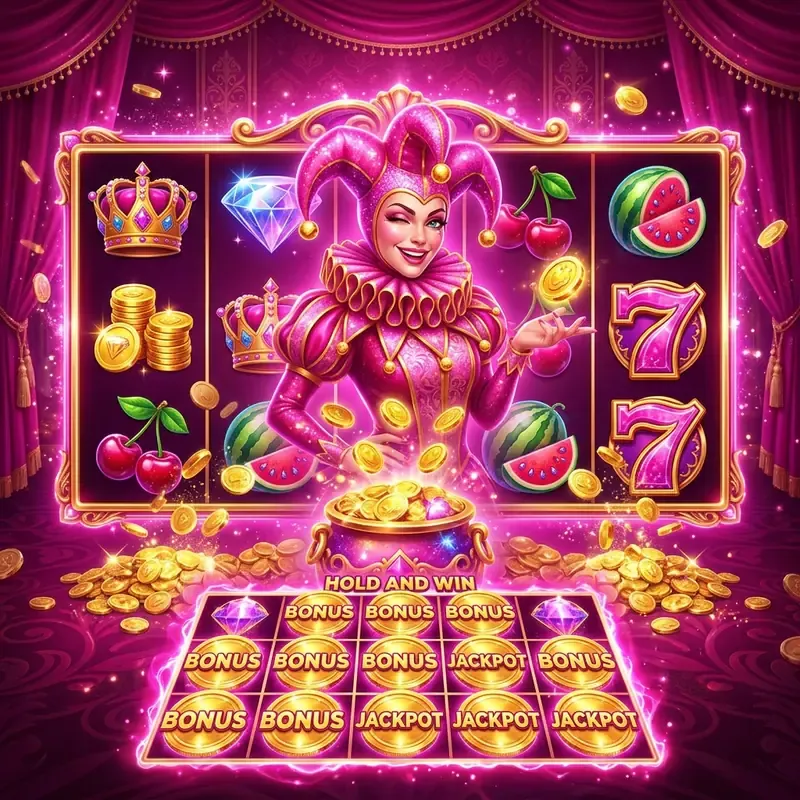
Pile of Gold. Above the reels sits the Pile of Gold meter, and this is where the game's psychology lives. Every Bonus (coin) symbol that lands in the base game feeds the pile. You therefore receive frequent, audible, visible "progress" feedback on spins that pay you nothing at all.
The structural fact, which any player can confirm from the info panel, is this: the Pile of Gold meter changes the on-screen feedback, not the mathematics of the next spin. Each outcome is generated independently by the random number generator. A partly filled pile does not make the bonus "due". A nearly full pile owes you nothing. If you find yourself continuing a session because the meter looks close, that is a signal to stop, not a reason to keep going.
The standard account of why this design works on players is variable-ratio reinforcement combined with near-miss effects: rapid repetition, frequent small wins and visible near-completion all support persistence at play. We flag that framing as the conventional explanation in electronic gaming machine research rather than as a measured effect size for this specific title, because we could not source a study with a stated sample and effect size for this game class. What is not in question is the independence of each spin.
Joker's Multipliers. The Joker can carry a multiplier value which amplifies wins. In implementations where the feature is enabled inside the bonus, a multiplier-Joker sharing the grid with locked coins amplifies the entire cumulative bonus total before payout, and that is the mechanism behind the largest recorded outcomes on this title.
Jackpot structure. The jackpot structure consists of four fixed tiers, Mini, Minor, Major and Grand, displayed above or beside the reels and scaled to the player's stake. Only one tier awards per round, determined by the cumulative coin value at round end (or by full-grid fill for the Grand). In most implementations the tier is added to the coin total; in some it functions as a floor payout for that level. Again: the prize panel at your operator is the authority.
What our sample suggested about outcomes. Across the bonus rounds we recorded, the majority produced modest returns in the Mini or Minor band, often in the region of 10× to 150× stake, while Major and Grand outcomes were comparatively rare. We present that as an observation from a small sample rather than as a statistical claim; establishing genuine tier frequencies would require thousands of triggered rounds and a provider-supplied dataset, neither of which we hold.